
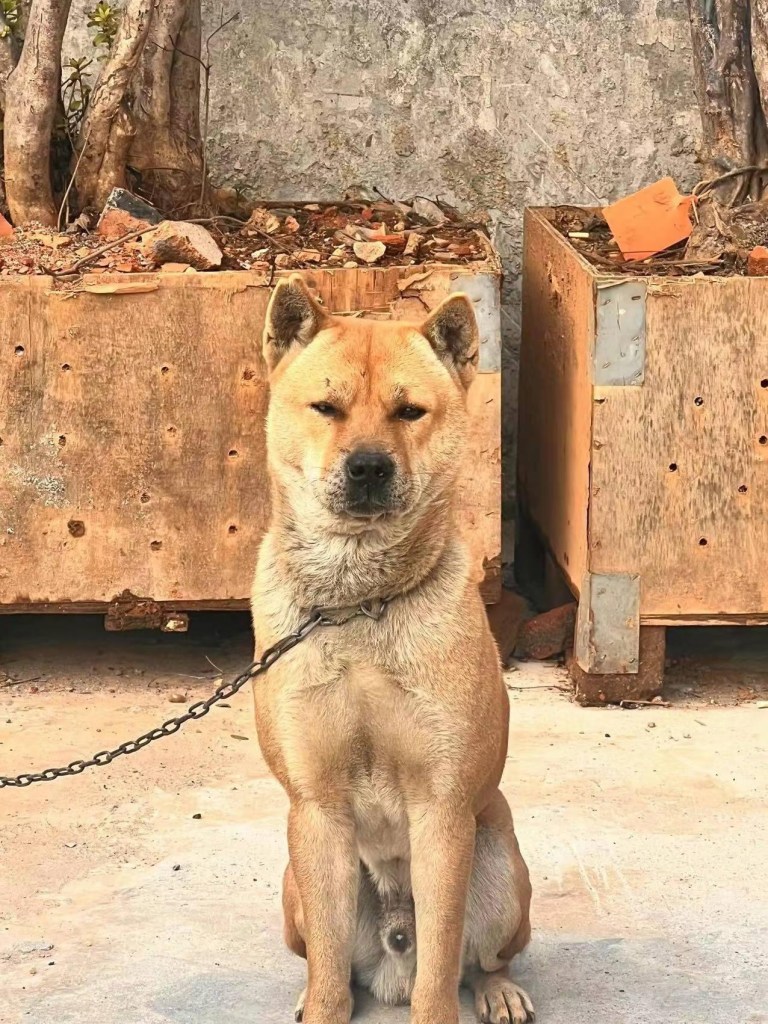
Village dogs embody a level of domestication, similar to cats. That is :not very high. They hang around human settlements, in a semi feral state, subsisting on garbage, and hunting small rodents, scavenging. They breed freely, without human intervention, and maintain a certain, dingo like phenotype: medium sized, prick ears, short double coat, curled tail. Often a tan or golden color. Many of the Japanese breeds have kept this basic body plan.
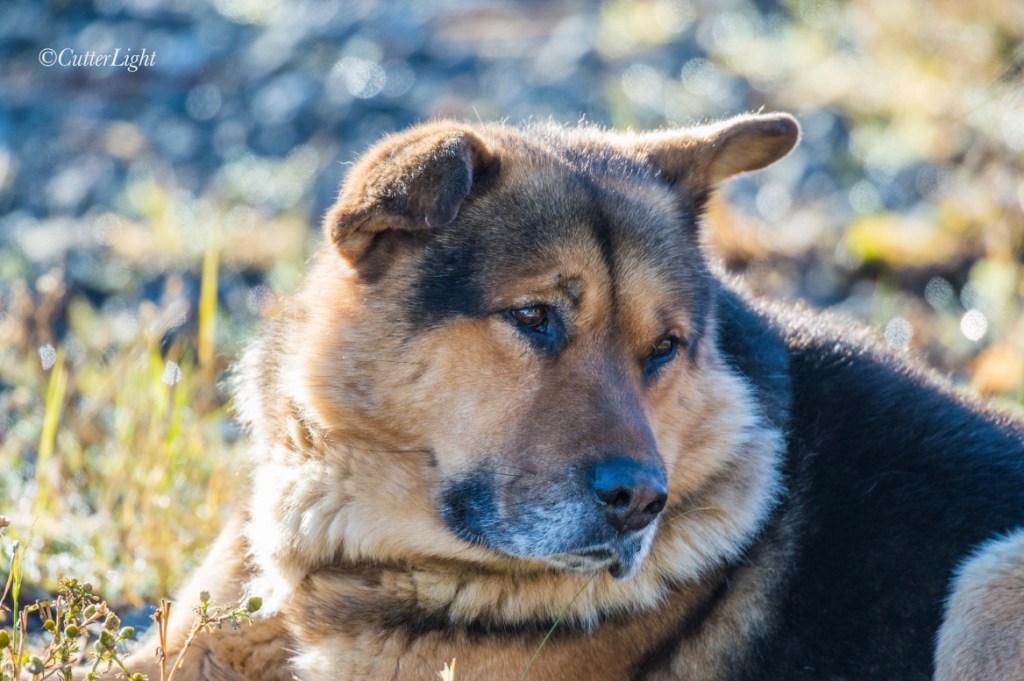
picture a dog intermediate in size, between an Akita and a Shiba inu.
The Nureongi of Korea, the Guangxi of China, the Canaan dog, of Israel, are of this type. As in the case of Japan, all the known dog breeds of the world were drawn from this original stock. In Japan most of these dogs were not modified much at all from the original. Different sizes were selected for, some coat colors, were chosen and standardized, but the basic form, remains the same. Same spitz like form, same pointy ears etc. Japanese breeds are described as “aloof” some also describe them as “cat like” Shibas, for example, will lick their paws and groom themselves like a cat. Another primitive breed, the basenji, from Africa, also has similar catlike characteristics. In fact, for being separated by so much geography, basenjis and shibas, are remarkably alike. They are from that same village dog phenotype.
Rather than being a coincidence, I think this cat like quality is illustrative of a lower degree of domestication, seen in these dogs, which they share with cats. Cats and dogs are both domesticated animals from the genus carnivora, unlike most domesticated animals, which are herbivores.
Most cats are not very much modified from their original form. They retain their ability to hunt, and because of this readily become feral. In fact, they have colonized the globe. They are one of the most successful carnivores on planet Earth, and are considered an invasive species.
Most dogs, on the other hand are further along, in the domestication process. They have been divided into genetically isolated “breeds” with often exaggerated physical features, akin to deformities. Pugs and bulldogs have pushed in faces, corgis and basset hounds have extremely short legs, poodles have wooly coats which need to be regularly trimmed. Some breeds are tiny, some, enormous. People in breed clubs, often maintain a type of folklore that these modifications are necessary, for these dogs to perform, their traditional role as working dogs. While that may be true to some degree, whats been actually happening, is these traits have been steadily exaggerated more and more for the purposes of the show ring. Historical photos reveal this. Its also common knowledge that most breeds have “working lines” and “show lines” and that the working lines are less exaggerated in appearance. One common trait selected for in show dogs is docility. This is a characteristic of domestication in general. It makes domesticated animals easier to handle.
The Russian fox domestication studies have shown that by breeding only for docility, other traits such as white patch markings, floppy ears, curled tails, shortened muzzles, smaller teeth appear within a few generations. These traits are also associated with juvenile, or neotenous traits. Basically the more domesticated a breed of dog is, the more puppy like, it is. This is because wolf pups have a socialization window, a stage in their life where they are friendly and readily form social bonds. During this stage, they will befriend any person or animal the happen to run into. After the socialization stage they become fearful or aggressive towards strangers.
In the domestication process this window is enlarged. In some breeds this window is extended to encompass their entire adult life. Picture a lab or a golden retriever who befriends everyone who walks by. These types are great for dog parks, where they befriend and play with everybody.
The primitive breeds, who hearken back to the dingo like village dogs, are not suited for dog parks. They retain too much territorial aggression. They also retain a high prey drive and will catch and kill small animals.
This village dog phenotype is a base line. I speculate that in some places, especially in Asia, populations of village dogs might be very ancient and hearken back to the first domesticated dogs. This is definitely true in Australia and New Guinea, but I suspect its true in other places as well. In other areas such as Indian reservations in the US, these dogs represent a pool of stray dogs which became semi feral and reverted to this dingo like form.
certain environmental constraints lead them to maintain this form. Very large dogs can’t scrounge enough food to survive. Tiny dogs would be cannibalised by larger dogs. Dogs with atavistic traits such as prick ears probably have other wild traits useful for survival. So eventually the population reverts to the original form. They live much like their ancestors as well. Living near human settlements but not being the pet of anyone in particular. Eating garbage, and hand outs, catching vermin, scavenging. They might be useful in alerting people of danger by barking as strangers approach.
sometimes people draw from this pool of dogs and adopt one as a pet, or to use as working dogs. This drawing off of dogs for working purposes is how landraces develop.
Landrace is like a breed, except that its more natural, more locally adapted and less uniform. For example, landraces usually don’t have pedigrees. Most landraces are very ancient.
The analogy I am making here in relating village dogs to humans is that I speculate that Humans too. have a base line, in terms of culture. That base line culture, is that of hunting, foraging and growing ones own food. Just like how a pet dog can become a stray and revert to the wild, so too can humans revert to being hunter gatherers and horticulturists. We may not be able to throw off all traces of domestication, and return to a completely primeval state, but we can reconnect with the natural world and be self-sufficient, yet still stay on speaking terms with the civilized world.
Be like a village dog.



Dear FROH, Such a high quality, professional post. Terrific writing-information and perspectives. Love, Mom
LikeLike